Anime Trail

The Real Places Behind Spirited Away

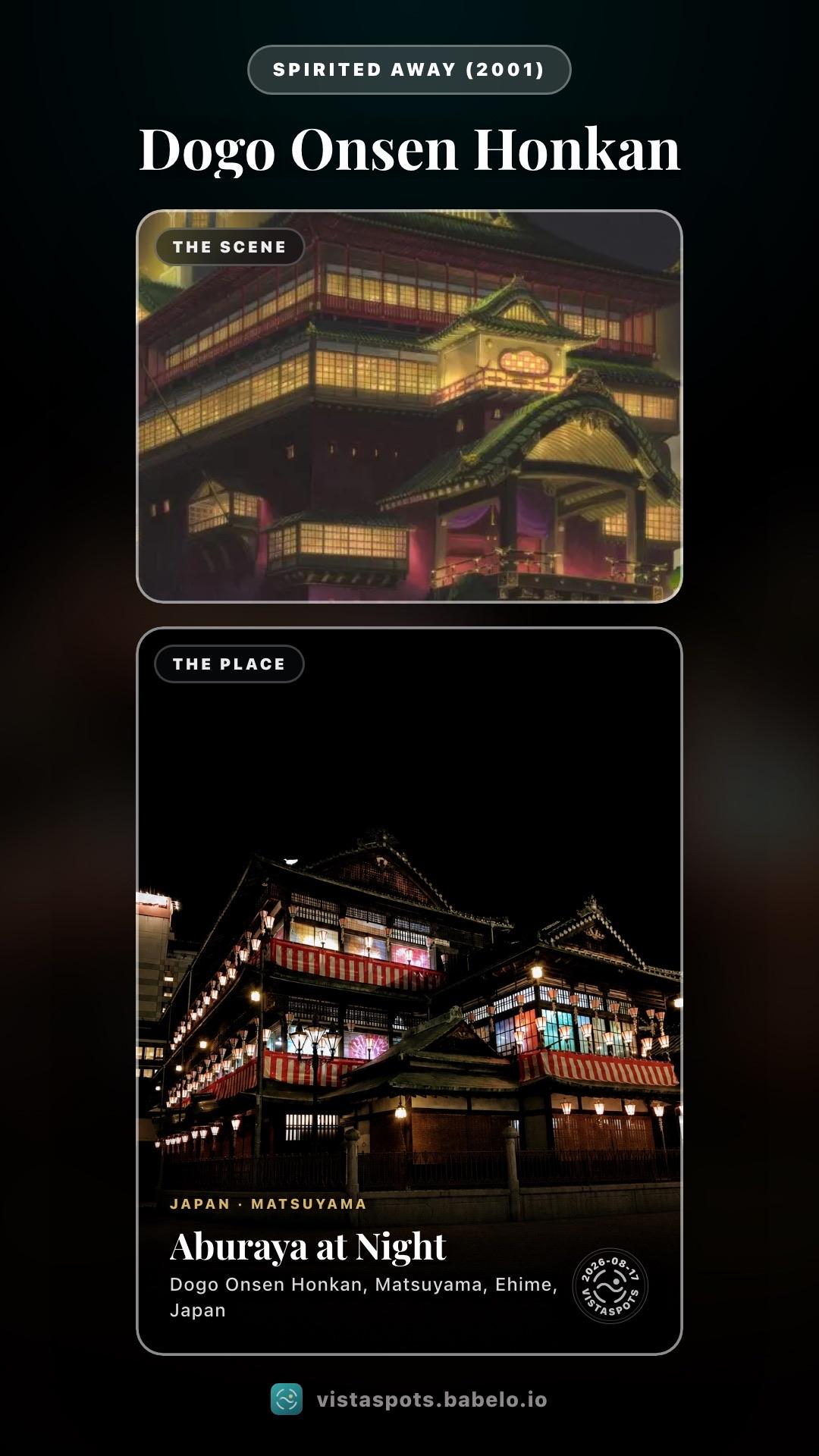
Spirited Away's bathhouse at night above a night photograph of the lit facade of Dogo Onsen Honkan in Matsuyama
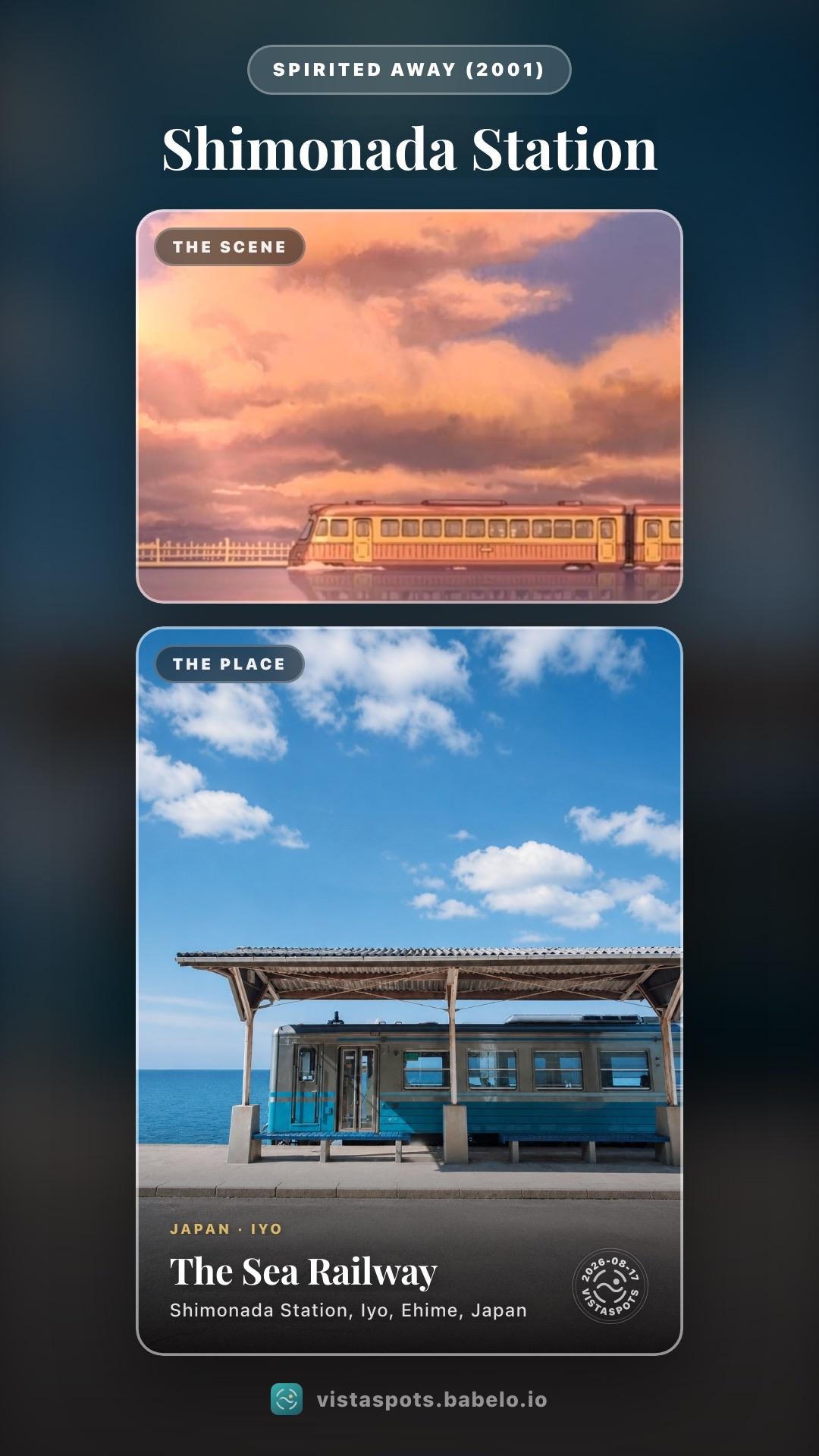
A Spirited Away frame of the railway over water above a photograph of a train at the seaside platform of Shimonada Station
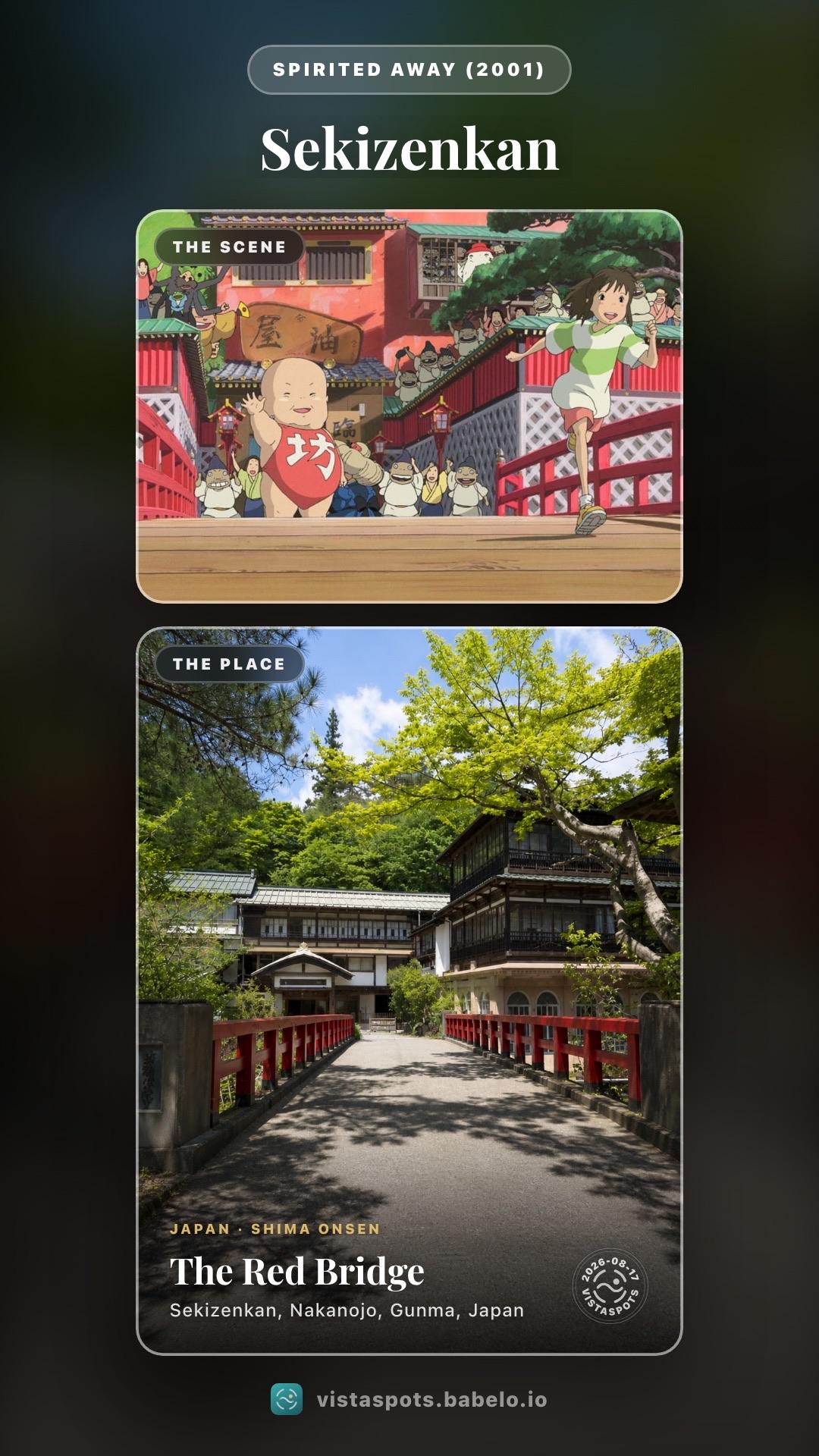
A Spirited Away frame of the bridge to the bathhouse above a photograph of the vermilion Keiun-bashi bridge at Sekizenkan

Spirited Away is hand-drawn animation, so it has no filming locations — only places Hayao Miyazaki and his art department looked at. Studio Ghibli has been specific about a couple of them, quiet about others, and one of the most visited pilgrimage sites in the world, the Taiwanese hill town of Jiufen, Miyazaki has denied outright. This trail collects four real places in Japan with a documented or widely held line back to the film, and it says plainly how strong each connection is rather than repeating the internet's assumptions.

Last updated

On the trail

Four real Spirited Away locations, graded by evidence

Every place on the Spirited Away Inspiration Trail, with the name it goes by in Spirited Away, where it is, and how you get in.
LocationIn the filmWhereGetting in
Dogo Onsen HonkanAburaya at NightMatsuyama, EhimeWorking bathhouse; entry fee at the door
Shimonada StationThe Sea RailwayIyo, EhimeFree; unstaffed platform, sparse trains
SekizenkanThe Red BridgeNakanojo, GunmaWorking ryokan; stay or pay for day bathing
Takei SanshodoKamaji's Boiler RoomKoganei, TokyoMuseum admission; closed Mondays
Spirited Away's bathhouse at night above a night photograph of the lit facade of Dogo Onsen Honkan in Matsuyama

Dogo Onsen Honkan

In the film: Aburaya at Night

Matsuyama, Ehime

The three-storey wooden bathhouse at the centre of Dogo Onsen was completed in 1894 and has been in continuous public use ever since, at one of the oldest hot springs in Japan. Studio Ghibli has named it as one of the models for Yubaba's bathhouse, and the interior explains why: a warren of narrow stairs, corridors and small tatami rooms stacked around the baths, the main one called Kami-no-Yu, the Bath of the Gods. The film's read on it is nocturnal — come after dark, when the building is lit and the crowd gathers out front.

A Spirited Away frame of the railway over water above a photograph of a train at the seaside platform of Shimonada Station

Shimonada Station

In the film: The Sea Railway

Iyo, Ehime

An unstaffed single-platform stop on the JR Yosan Line, opened in 1935, with almost nothing between the platform edge and the Seto Inland Sea. Until 1981, when land was reclaimed for National Highway 378, it was the closest railway station to the sea in Japan and waves washed the platform at high tide. Fans read the film's sea-railway sequence into it; Ghibli has not, and the sequence's usual cited origin is elsewhere. Come for sunset, which the station is genuinely famous for — there is a bench on the platform facing the water.

A Spirited Away frame of the bridge to the bathhouse above a photograph of the vermilion Keiun-bashi bridge at Sekizenkan

Sekizenkan

In the film: The Red Bridge

Nakanojo, Gunma

You cross the vermilion Keiun-bashi over a gorge to reach Sekizenkan's main building, and that crossing is why the inn appears on every Spirited Away list. The Honkan dates to 1691 and is registered as the oldest surviving wooden bathhouse structure in Japan. The association with the film is the inn's and the town's rather than Studio Ghibli's, so read it as homage, not source. The facade is floodlit roughly between six and ten in the evening, which is the window in which the bridge shot works.

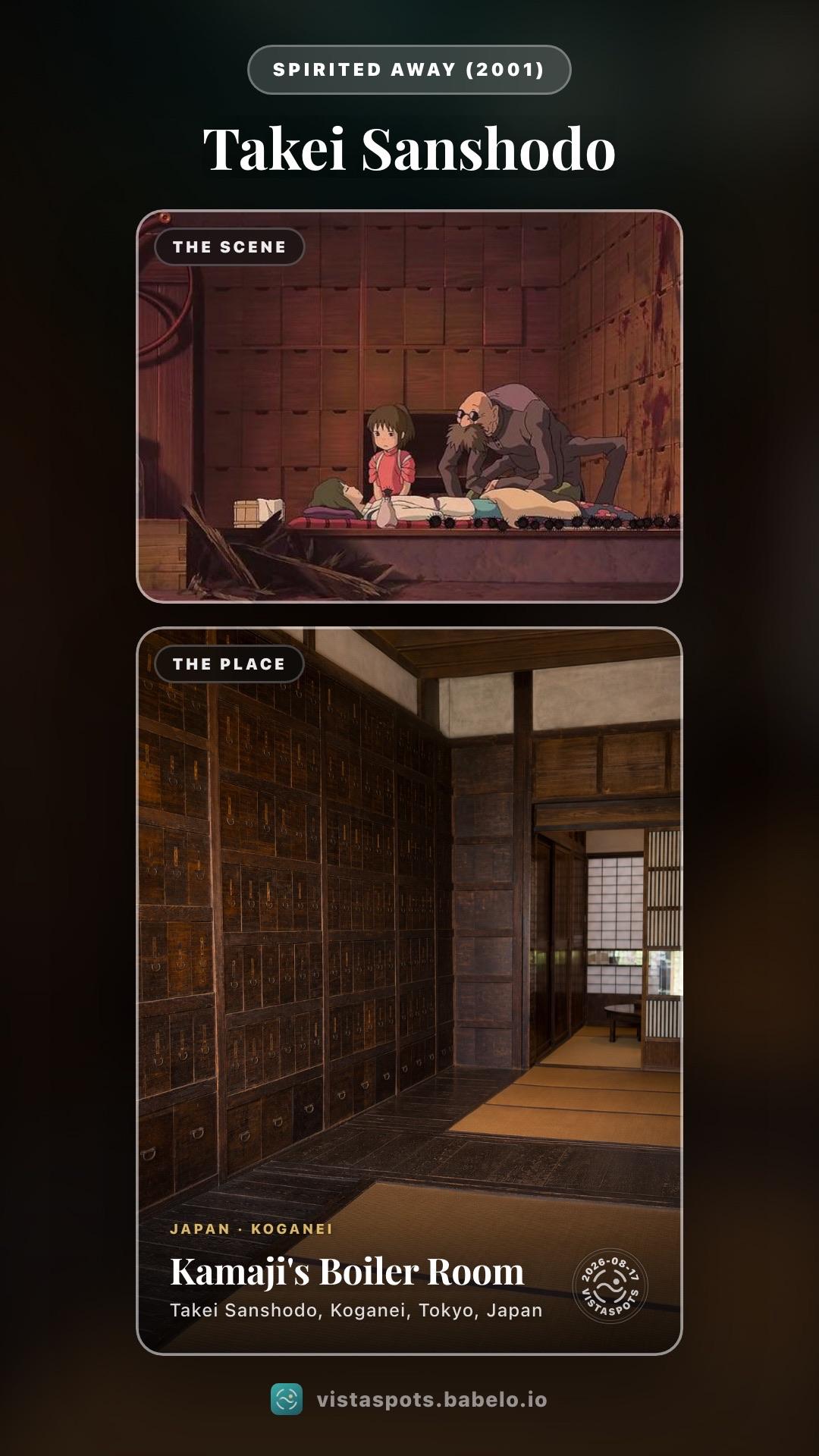
A Spirited Away frame of Kamaji's boiler room above a photograph of the wall of wooden drawers inside Takei Sanshodo

Takei Sanshodo

In the film: Kamaji's Boiler Room

Koganei, Tokyo

A stationery and writing-brush shop founded in the Meiji era, in a building put up in Kanda-Sudacho in 1927 and later moved to the open-air museum in Koganei, where it stands on the reconstructed Shitamachi-Nakadori street. Its back wall is a floor-to-ceiling grid of small wooden drawers, and that wall is Kamaji's boiler room. Studio Ghibli's offices are in Koganei and Miyazaki has said he draws on the museum, which makes this the most directly documented link on the trail after Dogo Onsen. The shot is from the shop front, straight in at the drawers.

About the film

Inspirations, not filming locations

Spirited Away (Sen to Chihiro no Kamikakushi) was released in 2001 and remains the highest-grossing Japanese film of all time. It is animation: nothing in it was photographed anywhere, and the town, the bathhouse and the railway across the water are composites drawn from many sources. So there is no such thing as a Spirited Away filming location — only buildings and landscapes that the film's makers drew from, and the evidence for each varies enormously.

Two of the four here are effectively on the record. Dogo Onsen Honkan in Matsuyama has been named by the studio as one of the models for Yubaba's bathhouse. The wall of small wooden drawers at Takei Sanshodo — a shop preserved at the Edo-Tokyo Open Air Architectural Museum in Koganei, a short distance from Ghibli's own offices, which Miyazaki has said he used as a source — is the acknowledged origin of Kamaji's boiler room.

The other two are weaker, and worth knowing as such. Sekizenkan's vermilion bridge at Shima Onsen is claimed by the inn and by the town rather than by Studio Ghibli; treat it as a well-earned homage. Shimonada Station is a fan attribution — the sea-railway sequence is usually traced instead to a stretch of the Meitetsu Tokoname Line laid on temporary track over the water after the 1959 Isewan typhoon, which no longer exists. Jiufen, in Taiwan, is left off this trail entirely because Miyazaki has publicly rejected the connection.

Film
Spirited Away / Sen to Chihiro no Kamikakushi (2001)
Director
Hayao Miyazaki
Studio
Studio Ghibli
Filmed at
Nowhere — the film is hand-drawn animation
On this trail
4 real places in Ehime, Gunma and Tokyo
Confirmed
Dogo Onsen Honkan and Takei Sanshodo, by Ghibli
Excluded
Jiufen, Taiwan — Miyazaki denied the link

VistaSpots is an independent travel app and is not affiliated with, endorsed by, or sponsored by Studio Ghibli or any rights holder in Spirited Away. Film and character names are used descriptively, to identify real locations that are open to the public.
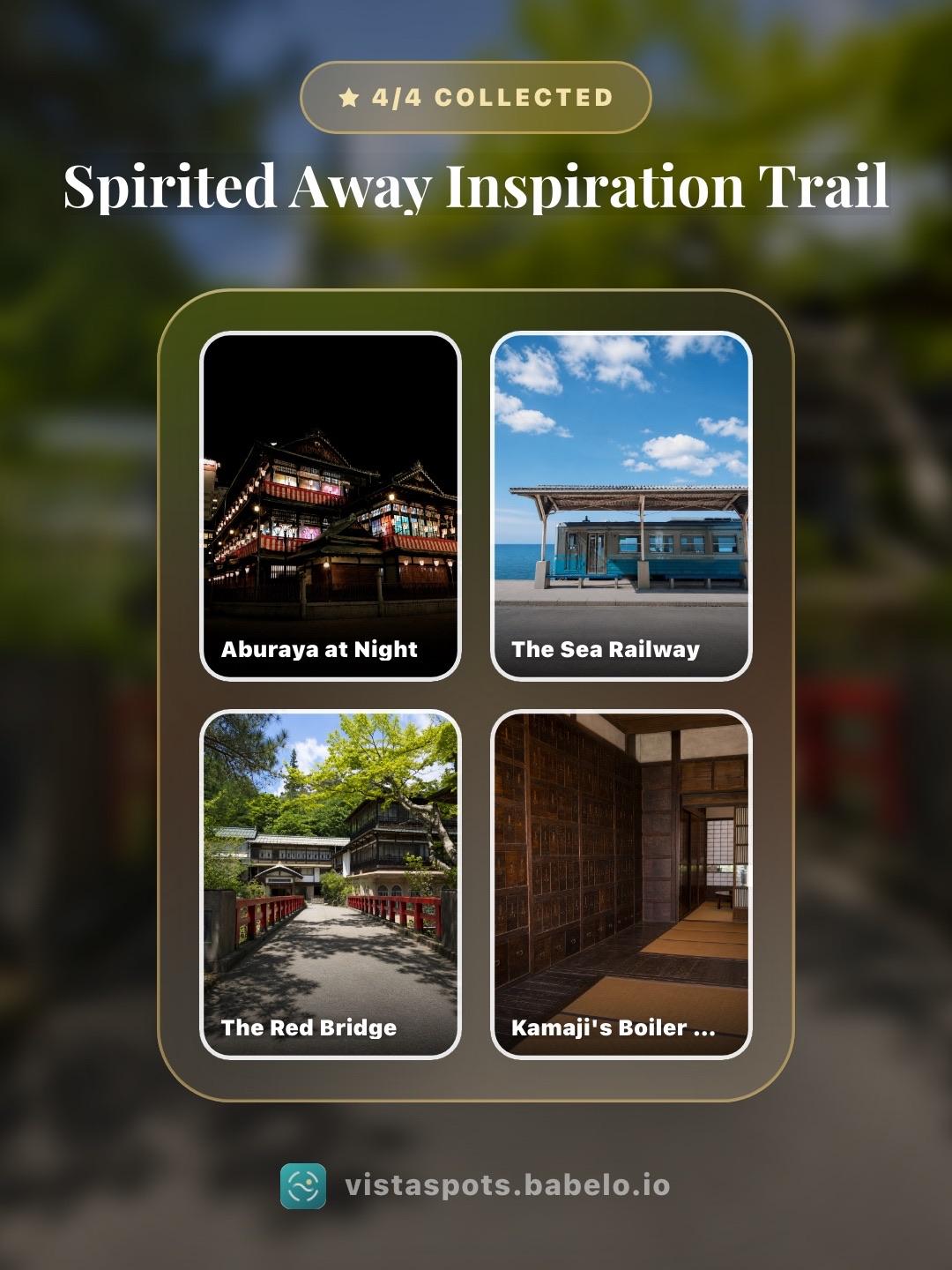
VistaSpots collection poster for the Spirited Away Inspiration Trail showing all four places collected

The finished trail

Four places, one page

Collect all four and the trail closes into a single page — Aburaya at night, the sea railway, the red bridge, the boiler room — with your own photograph standing in for each one. It is the page you show someone when they ask what you did in Japan, and it is the reason the four are worth doing as a set rather than one at a time.

For fans who travel

Collect the places the film came from

An inspiration trail is only worth walking if the links are real. These four are ordered by how well documented the connection is, and each card is drawn from the angle the film echoes.

Honest attributions

Two of these are acknowledged by Studio Ghibli, one is the venue's own claim, and one is a fan reading. Each card says which, so you know whether you are standing in a source or in a very good resemblance.

The angle the film echoes

Dogo Onsen after dark, the red bridge between six and ten in the evening when the facade is lit, the drawer wall from the shop front. The card shows you the view worth crossing the country for.

Keep the trail together

Collect a place and it lands in one album with everywhere else you have been, instead of scattering through a camera roll you never scroll back through.

FAQ

Frequently asked questions

Where was Spirited Away filmed?

Nowhere. Spirited Away is hand-drawn animation, so it has no filming locations. What exists are real buildings and landscapes that Hayao Miyazaki and his art department drew from — chiefly Dogo Onsen Honkan in Matsuyama and the Edo-Tokyo Open Air Architectural Museum in Koganei, both of which the studio has acknowledged.

Is Jiufen the town from Spirited Away?

No. Jiufen, in northern Taiwan, is the most visited Spirited Away pilgrimage site in the world, but Miyazaki has publicly denied that it inspired the film. The resemblance is real and the town is worth visiting on its own terms; the connection to the film is not. That is why Jiufen is not on this trail.

Which real bathhouse inspired Spirited Away?

Dogo Onsen Honkan in Matsuyama, Ehime, is the one Studio Ghibli has actually named as a model for Yubaba's bathhouse. Sekizenkan at Shima Onsen in Gunma is widely associated with the film because of its vermilion bridge, but that association comes from the inn and the town rather than from the studio. Both are real hot springs you can bathe in.

Where is Kamaji's boiler room in real life?

Its drawer wall is at Takei Sanshodo, a preserved stationery and writing-brush shop on the Shitamachi-Nakadori street inside the Edo-Tokyo Open Air Architectural Museum in Koganei, western Tokyo. The museum is a short trip from central Tokyo and is open to the public for a modest admission fee.

Can you stay at the Spirited Away inn?

You can stay at Sekizenkan, which operates as a working hot-spring ryokan at Shima Onsen in Gunma; the 1691 Honkan and its bathhouse are part of the inn. Dogo Onsen Honkan is a public bathhouse rather than a hotel — you pay at the door and bathe, and there are plenty of ryokan around it in Matsuyama.

Can you visit the Spirited Away locations in one trip?

Two of the four are close together: Dogo Onsen Honkan in Matsuyama and Shimonada Station are both in Ehime, about an hour apart on the JR Yosan Line, so they pair naturally. Takei Sanshodo is in western Tokyo and Sekizenkan is in the Gunma mountains, roughly three hours from Tokyo. A realistic trip is Tokyo and Gunma on one leg, Shikoku on another.

How many Spirited Away locations are there?

There is no fixed number, because the film is animation and the attributions range from studio-confirmed to purely speculative. This trail keeps four Japanese places with a documented or widely held link, and deliberately leaves out both Jiufen, which Miyazaki denied, and the additional buildings inside the Edo-Tokyo museum, so that one visit does not double as three separate stops.

How does VistaSpots work?

Open the map, pick a place, and go stand where the shot actually works — the app shows you the vantage, not just the pin. Being there on-site earns that place's collectible card, saved to one album alongside everywhere else you have travelled. It is free.

See the real places behind the film

Four places across Ehime, Gunma and Tokyo, with the vantage for each and an honest account of the link. Collect them as you go and the trail becomes a page you keep.